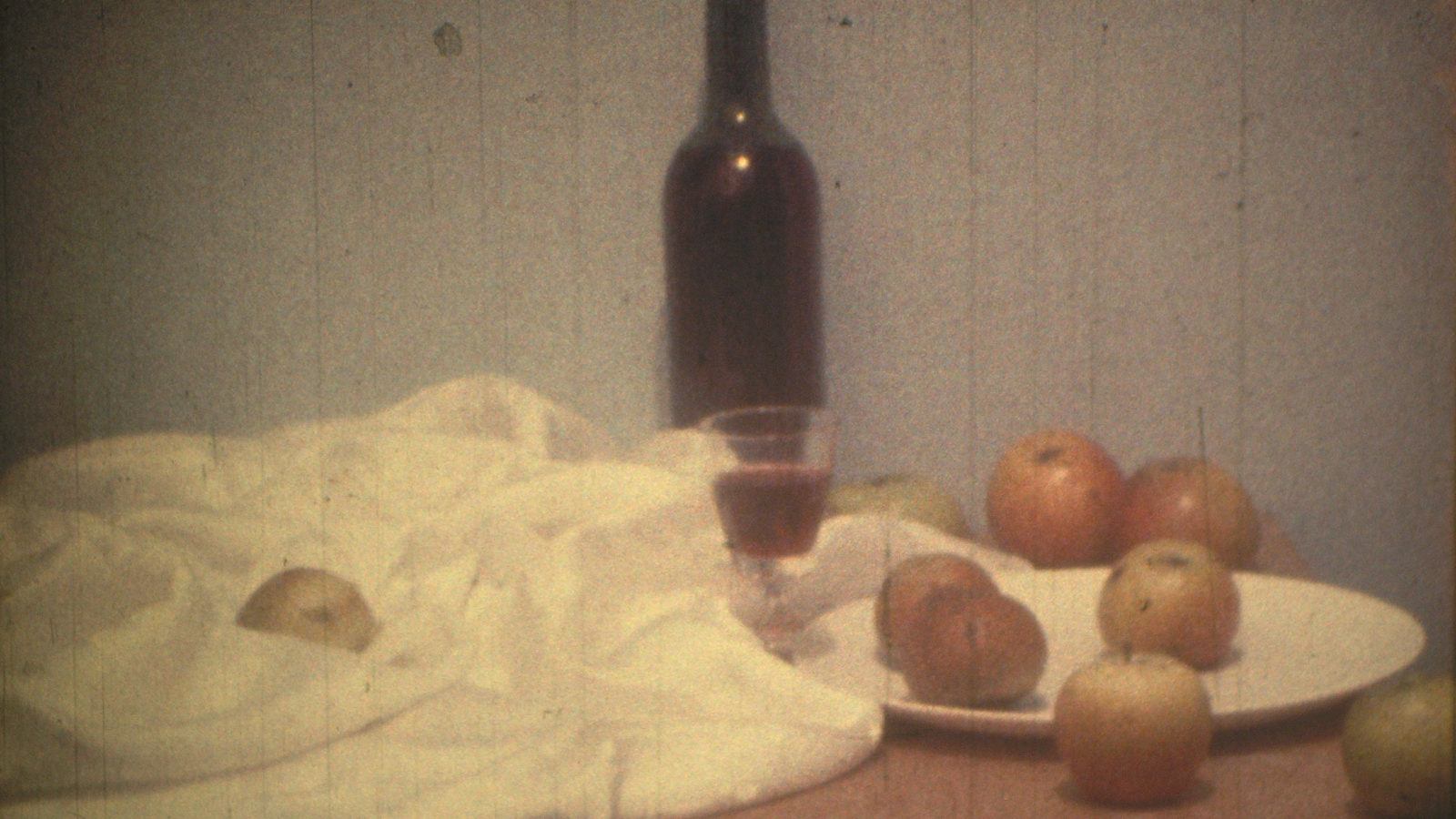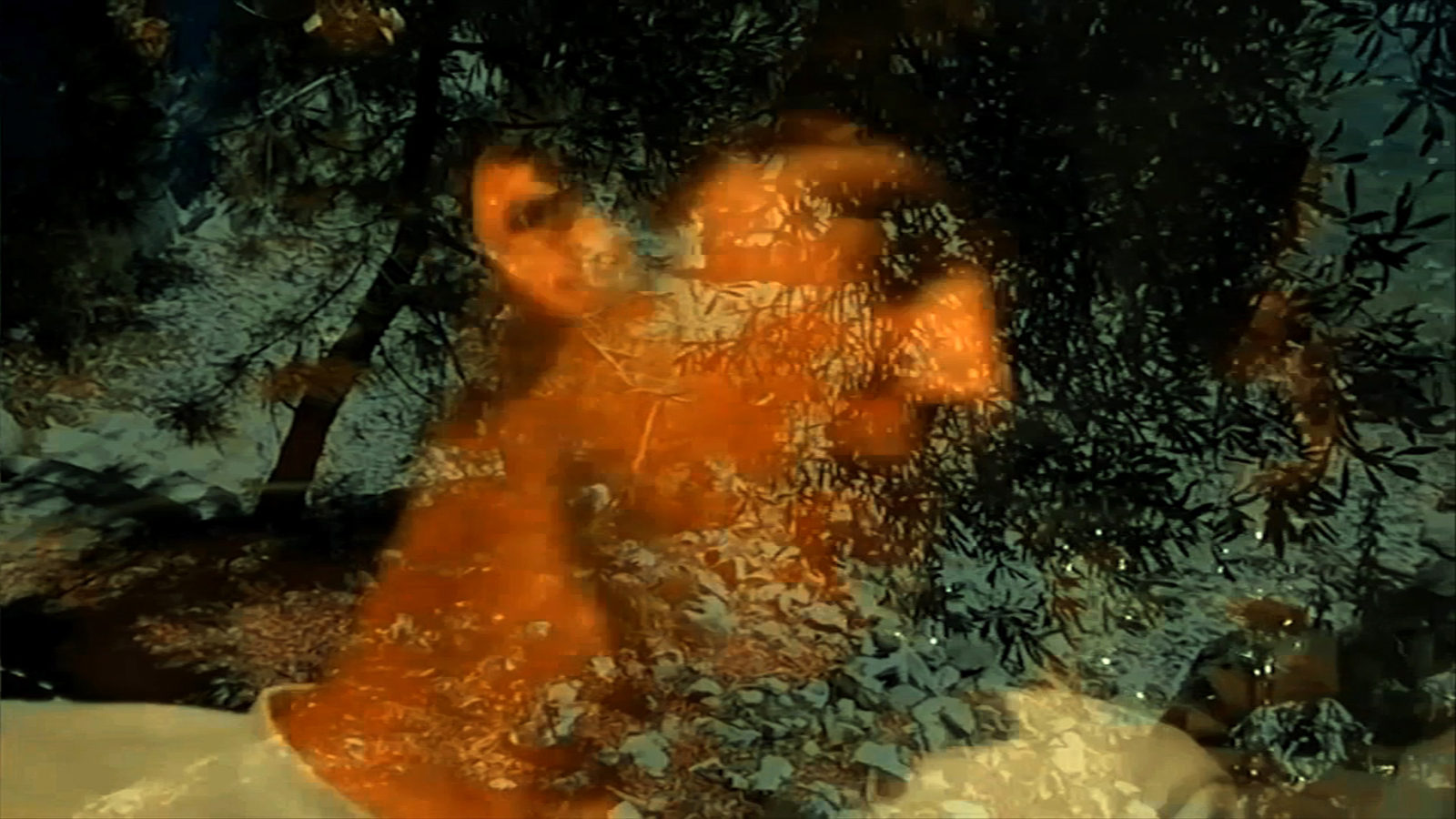


Still life is a well-known genre of art history, often considered “minor”, and possibly for that same reason, it has served as a vehicle for experimentation for painters who began to think about the very essence of painting and freeing still life from the chains of symbolism. To realize this, you need only to think about the still life works of Gauguin, Matisse, Cézanne, or later, those of the Cubists or of Léger. This idea of still life serves as one way, of the hundreds of ways there may be, to approach the work of one of the most daring and reflective artists who exists (note that the word “filmmaker” is not used; it would not cease to be a tricky or insufficient term when referring to Malcolm Le Grice). The idea of still life is useful to the extent that Le Grice begins his journey as a painter, and in that several of his works make direct reference to that genre and use it in the same manner as the aforementioned painters in order to study the cinema itself as a medium, detaching itself from the narrative and from the supposedly realistic record of reality, to investigate in a plastic, reflective and performative way this thing that we know as cinema. Film is, then, the strip of celluloid or set of pixels, not the hypothetical still life apples in motion, and it is also what happens while the viewer watches it, in the “here and now” of the projection in which each one of us creates his or her own film.
This selection of Le Grice films, although brief and incomplete, serves to account for the multiple forms that these ambitions have adopted over time. He began to experiment with film format in the sixties under the wing of the famous London Film-makers Co-op (in which he played a crucial role, not only as an artist but in starting up the workshop where many of the cooperative’s works would be produced), having his first experiences with computers in the seventies, the definitive step to video in the eighties and the explosion of possibilities of digital media.